Author of The Success Code: Lessons Most People Learn Too Late
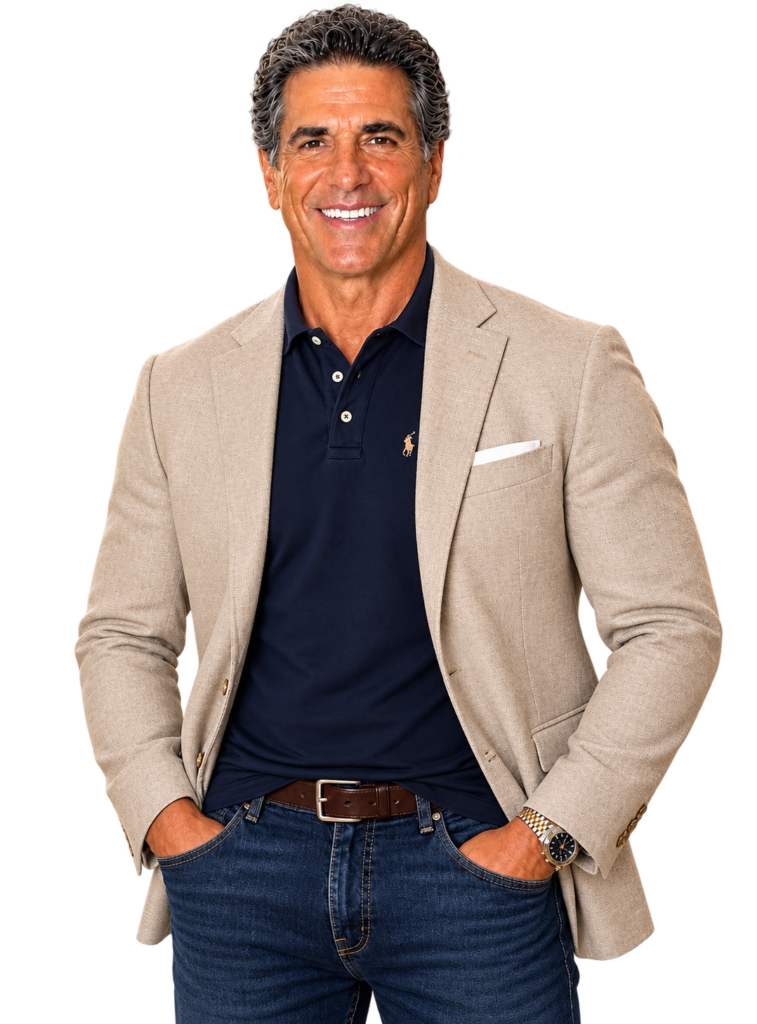
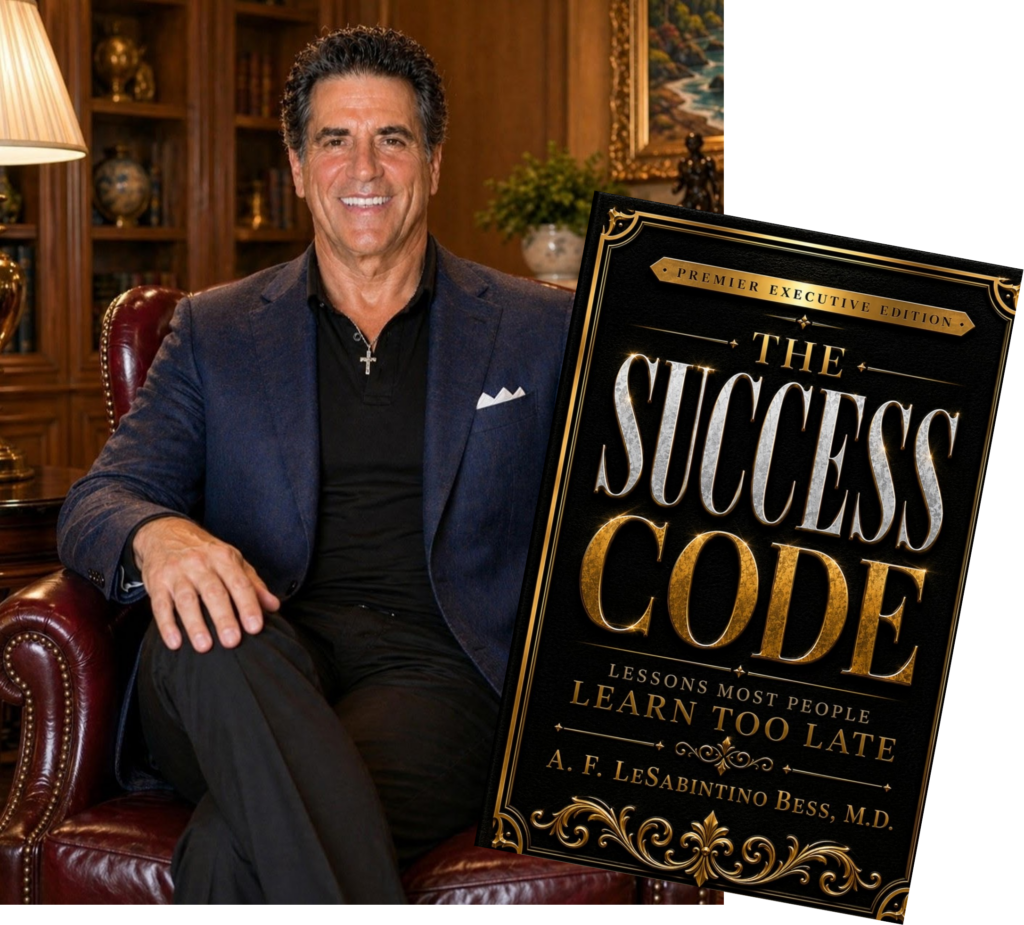
A. F. LeSabintino Bess, M.D., is a physician, healthcare executive, entrepreneur, mentor, and author. He has founded businesses, organizations, and a Christian youth ministry, encouraging others to realize their full potential.
As a teenager, he struggled in school, often got into fights, and was rejected by more than twenty colleges. Only one accepted him, but his father never stopped believing in him. He went on to graduate magna cum laude, earn his medical degree from Temple University, and hold senior leadership roles at three leading pharmaceutical companies. His early struggles inspired a lifelong interest in the principles of personal achievement and fulfillment, ultimately leading him to write The Success Code.
He earned two martial arts black belts and taught for many years. As a pianist and drummer, he has performed with bands and church worship groups. He is a church elder and worship team leader. He lives with his wife, Kay, in Pennsylvania’s Lehigh Valley. Their 30-acre farm includes 18 acres of corn and soybeans, with the remaining 12 acres providing a home for 32 llamas, alpacas, horses and more than 120 chickens, and six Mastiffs and Kangals. His family and Christian faith remain the foundation of his life, and he is deeply grateful for the love, encouragement, and opportunities that have shaped his journey.
Few people who knew A. F. LeSabintino Bess during his high school years would have imagined that he would one day become a physician, hold senior executive positions at some of the world’s leading pharmaceutical companies, or write a book about the principles of personal achievement.
He certainly wouldn’t have predicted it himself
As a teenager, he lacked direction and discipline. He rarely studied, frequently skipped classes, got into fights, and came dangerously close to failing high school. His report cards reflected his struggles in school, with a mixture of Cs, Ds, and Fs.
Throughout those difficult years, one person never stopped believing in him: his father.
Despite his son’s poor grades and questionable decisions, his father remained his strongest supporter. He frequently reminded him that he was capable of accomplishing whatever he set his mind to. He saw potential in his son that few others seemed to recognize, including the young man himself.
Concerned that his son was wasting his abilities, his father explored the possibility of sending him to a private boarding school, hoping that a more structured environment might help him find direction. After several interviews, however, none of the schools was willing to accept him.
His prospects for college were hardly more encouraging. He applied to more than twenty colleges and received only one acceptance, from Susquehanna University in Pennsylvania.
That single acceptance became an important turning point. During his college years, he began discovering principles that would influence the rest of his life. He learned the value of persistence, self-discipline, personal responsibility, setting meaningful goals, and replacing negative thinking with a more constructive outlook. The changes did not happen overnight, and there were setbacks along the way. Gradually, however, his academic performance improved, his confidence grew, and ambitions that once seemed unrealistic began to feel attainable.
The young man who had nearly failed high school and struggled to gain admission to college eventually graduated magna cum laude and went on to earn his medical degree from Temple University School of Medicine.
Looking back, he has never forgotten his father’s confidence in him. Even when he doubted himself, his father stood beside him, offering encouragement rather than giving up on him. He believed in his son more than his son believed in himself.
That experience left a lasting impression. It taught him something he would come to appreciate more deeply over the years: sometimes the difference between giving up and moving forward is having someone who sees possibilities in us that we cannot yet see in ourselves.
It is a lesson that continues to influence his approach to mentoring others and is reflected in the message he hopes to share through The Success Code.
After earning his medical degree, he completed postgraduate training at Thomas Jefferson University Hospital before beginning a career in pharmaceutical medicine. Over the decades that followed, he held senior executive positions with Abbott Laboratories, Hoffmann-La Roche, and Novartis, three of the world’s leading pharmaceutical companies. He also served as President and Chief Executive Officer of American Health Systems Corporation for more than fifteen years.
His professional work centered on drug safety, medical services, and the evaluation and safe use of medicines. He became a respected authority in these fields and was recognized by the U.S. Food and Drug Administration (FDA) as an expert in drug safety and pharmacoepidemiology. His responsibilities included providing medical, scientific, and strategic leadership in organizations where decisions could have important consequences for patients and public health.
He has lectured at medical schools, colleges of pharmacy, and universities, and presented at scientific meetings, FDA conferences, and professional forums. His writings include scientific articles, editorials, and other professional publications addressing pharmaceutical medicine, drug safety, and clinical research.
His interest in discipline, perseverance, and personal development extends well beyond his professional life. As a young man, he became deeply involved in martial arts, earning black belts in Tae Kwon Do and Chinese Kenpo. He compiled a competitive record of 52 wins and 4
losses and taught martial arts for many years. Although he enjoyed the physical challenges and competition, the lessons he valued most involved patience, humility, restraint, and self-control. He came to appreciate that real strength has as much to do with character as it does with physical ability.
His Christian faith has also played an increasingly important role in shaping his outlook on life. He serves as an Elder and Worship Team Leader at his church, where he enjoys combining his love of music with his commitment to Christian fellowship and service. His faith has strengthened his belief that the abilities and opportunities people receive carry with them a responsibility to use those gifts wisely and, whenever possible, for the benefit of others.
He founded StoneBridge Oasis Cinema Productions with the goal of producing inspirational films exploring faith, leadership, and personal growth. He and his wife, Kay, also founded StoneBridge Christian Youth Ministry and StoneBridge Llama and Alpaca Ranch.
Although grateful for the opportunities his career has provided, he has never forgotten how uncertain his future once appeared. Those early struggles helped shape an interest that has remained with him throughout his adult life.
Why do some people achieve remarkable success while others, often possessing similar intelligence, education, and opportunities, never come close to realizing their potential?
The question fascinated him. He began studying accomplished individuals from different backgrounds, examining their attitudes, habits, decisions, and approaches to adversity. He also drew upon his own experiences in medicine, business, leadership, and personal relationships, paying attention to what worked, what failed, and why.
Over time, he noticed that certain principles appeared repeatedly. They were not necessarily complicated, nor were they reserved for exceptionally gifted individuals. Many were practical ideas and behaviors that could be learned and deliberately applied. Yet he was struck by how seldom these lessons were taught in school or discussed in ways people could readily put into practice.
He began sharing what he learned with others.
Throughout his career, he has mentored executives, entrepreneurs, attorneys, educators, business owners, skilled tradesmen, and students. Their backgrounds and ambitions were often very different, but many faced similar obstacles: uncertainty, self-doubt, fear of failure, poor decisions, or simply not knowing how to move forward.
He found particular satisfaction in helping people recognize abilities and opportunities they had overlooked. Sometimes that meant offering practical guidance. At other times, it meant listening, asking questions, or encouraging someone who had begun to lose confidence in themselves.
These experiences, together with decades of observation, study, and lessons learned through his own successes and mistakes, eventually became the foundation of The Success Code: Lessons Most People Learn Too Late.
The book brings together principles and techniques he has developed, used, and refined throughout his life. It reflects his belief that success is rarely the result of luck, intelligence, or favorable circumstances alone. More often, it involves the decisions people make, the habits they develop, their willingness to persevere, and the way they respond when life does not unfold as expected.
He is the first to acknowledge that he has made his share of mistakes. Some were relatively minor; others carried lessons that stayed with him for years. He does not claim to have all the answers, nor does he believe that a successful career makes anyone an expert on every aspect of life. Much of what he considers most valuable was learned through experience, sometimes through disappointment, and often through the guidance and encouragement of others.
He has often wondered how different his early years might have been if someone had introduced him to these principles when he was a teenager. Perhaps he would have avoided some mistakes and recognized opportunities sooner. That question stayed with him and became one of the reasons he decided to write The Success Code. He wanted to share what he had learned in the hope that others might find their way a little sooner and with fewer unnecessary struggles
Kay has been his wife, closest companion, and partner for more than forty years. Together, they have shared the demands of professional life, the pleasures and challenges of raising a family, and a variety of business, charitable, and personal endeavors. He considers their marriage, family, and shared Christian faith among the greatest blessings of his life.
Both are active philanthropists who believe that giving back is an important part of living a meaningful life. Through charitable support, community involvement, and their personal efforts, they have sought to help others and contribute to causes they believe in. They regard philanthropy not simply as an obligation, but as an opportunity to express gratitude for the blessings they have received.
Away from his professional interests, he and Kay enjoy a very different kind of life on their private country estate in Pennsylvania’s Lehigh Valley. They believe the region is among the most beautiful in the country and never tire of its rolling hills, wooded landscapes, farmland, and changing seasons.
Their property includes a ten-acre working farm and another eighteen acres devoted to growing soybeans and corn. With gardens, ponds, woodlands, and open fields, the estate provides plenty of opportunity to pursue their shared love of nature and country living.
It also provides a home for a rather large collection of animals: thirty-two llamas and alpacas, more than 120 chickens and guinea hens, three families of friendly barn cats and kittens, four Mastiffs, two Kangals, and two Rottweilers. Needless to say, there is seldom a shortage of activity around the farm.
He takes great pleasure in caring for the animals, planning landscaping improvements, and overseeing the maintenance and continued development of the estate. After spending much of his career in executive offices, scientific meetings, and boardrooms, he particularly enjoys the opportunity to be outdoors, surrounded by nature, and involved in projects that enhance the beauty and character of the property. He takes considerable satisfaction in seeing his ideas come to life and appreciates the skill and dedication of the people who help make them possible.
A lifelong sports fan, he is especially passionate about Penn State football and the Philadelphia Eagles. His love of the game extends to collecting sports memorabilia, particularly items associated with memorable players and moments in football history. Another interest is collecting luxury automobiles and high-performance trucks, whose engineering, craftsmanship, and design he has long appreciated.
Music has been a part of his life for many years. He plays piano, drums, and percussion and enjoys performing with both Christian worship groups and rock bands. His musical interests range from contemporary Christian music to classic rock, and he finds playing music both personally rewarding and an enjoyable way to connect with others.
For all his professional interests and activities, many of his favorite moments are relatively ordinary ones: spending time with Kay and their family, enjoying the property and their animals, playing music, or settling in to watch a Penn State or Eagles football game.
Over the years, his understanding of success has changed. Although he values professional achievement and the opportunities it creates, he has come to appreciate that a successful career and a fulfilling life are not necessarily the same thing. His marriage, family, faith, friendships, and opportunities to help others have become increasingly important to him. He believes that what people accomplish matters, but so does how they live, how they treat others, and what they leave behind.
That belief lies at the heart of The Success Code.
Dr. A. F. LeSabintino Bess hopes the book will encourage readers to recognize their God-given potential and understand that their early circumstances, past mistakes, or present difficulties do not have to determine the rest of their lives. He hopes they will approach new opportunities with confidence, face adversity with courage, pursue meaningful goals with determination, and make choices guided by integrity, responsibility, and faith.
He does not believe that everyone needs to become a physician, business executive, entrepreneur, or financially successful individual to lead an extraordinary life. People have different gifts, circumstances, responsibilities, and dreams. What matters is recognizing what is important, developing one’s abilities, making thoughtful decisions, and using the opportunities available to build a life of meaning and purpose.
If the experiences and principles shared in The Success Code help someone avoid a painful mistake, regain confidence, improve a relationship, discover a new direction, or achieve something they once thought impossible, he will consider the effort of writing it worthwhile.
For Dr. A. F. LeSabintino Bess, the greatest measure of the book’s success will not be how many copies are sold, but how many lives are changed, how many dreams are realized, and how many people discover that they are capable of far more than they ever imagined.